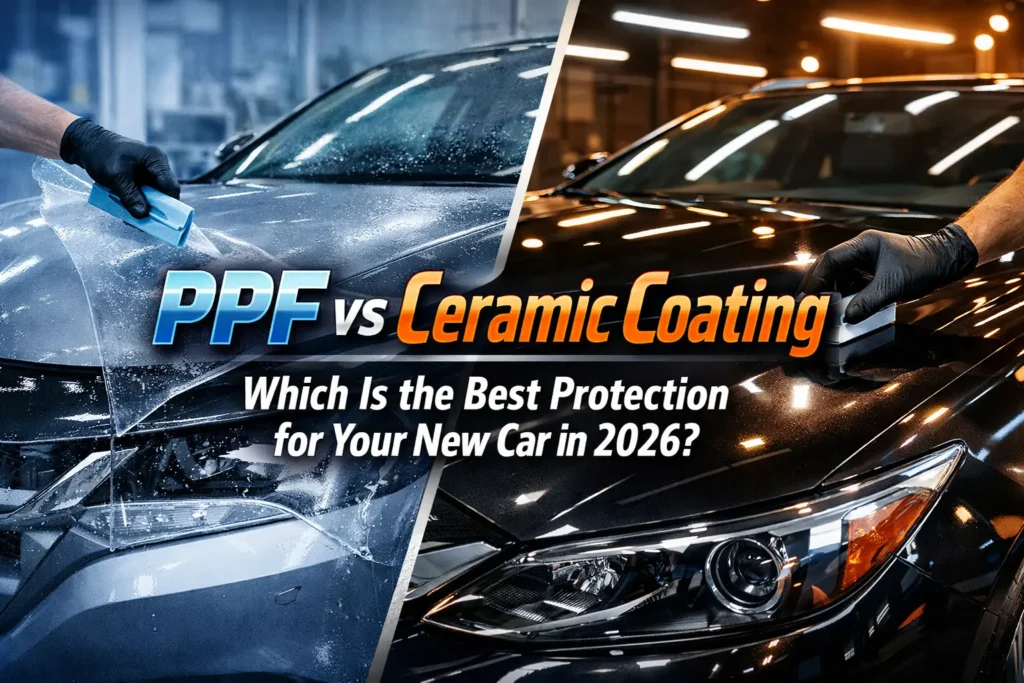
PPF vs Ceramic Coating: Which Is the Best Protection for Your New Car in 2026?
Introduction
Why Paint Protection Matters More in 2026
Modern automotive paintwork is a marvel of engineering, yet it remains surprisingly vulnerable. In 2026, car paints are thinner, more eco-compliant, and less forgiving of neglect. Environmental regulations have reduced solvent-heavy clear coats, making them more susceptible to micro-scratches, oxidation, and chemical etching. Add increasingly congested roads, unpredictable weather patterns, and aggressive urban pollutants, and the need for robust paint protection becomes undeniable.
A new car is no longer just transportation. It is an asset, a statement, and often a long-term investment. Protecting its exterior is not cosmetic indulgence; it is practical foresight.
The Rise of Advanced Surface Protection Technologies
Traditional waxing has become largely obsolete. In its place, two dominant technologies now define the paint protection landscape: Paint Protection Film (PPF) and Ceramic Coating. Both promise durability, gloss, and resistance to damage, yet they operate on fundamentally different principles. Understanding these differences is essential before committing to either solution.
Understanding Paint Protection Film (PPF)
What Is Paint Protection Film?
Paint Protection Film is a transparent, thermoplastic urethane film applied directly to a vehicle’s painted surfaces. Originally developed for military use to protect helicopter blades from debris, PPF has evolved into a precision-engineered automotive safeguard. It forms a physical barrier between the paint and the external world.
Unlike coatings that chemically bond to paint, PPF acts as a sacrificial layer, absorbing impacts and abrasions that would otherwise damage the clear coat.
Materials, Composition, and Technological Evolution
Modern PPF is a multilayer construct. At its core lies a flexible urethane base that provides impact resistance. Above this sits an elastomeric clear coat, often self-healing, which allows light scratches to disappear with heat exposure—either from sunlight or warm water.
By 2026, premium PPFs feature hydrophobic top layers, UV inhibitors, and enhanced optical clarity. Yellowing, once a major concern, has been largely mitigated through advanced polymer chemistry.
Key Benefits of PPF for New Cars
PPF excels in areas where physical damage is likely. It offers exceptional protection against:
Stone chips and road debris
Minor abrasions and swirl marks
Insect splatter and bird droppings
UV-induced paint degradation
For high-impact zones such as bumpers, bonnets, side mirrors, and door edges, PPF provides a level of defense unmatched by any liquid-applied solution.
Limitations and Considerations of PPF
Despite its strengths, PPF is not without drawbacks. It is significantly more expensive than ceramic coating, particularly when applied to an entire vehicle. Installation quality is paramount; poor workmanship can result in visible seams or trapped contaminants.
Additionally, while modern films are highly durable, they are not permanent. Most high-quality PPFs last between five to ten years, after which replacement may be necessary.
Understanding Ceramic Coating
What Is Ceramic Coating?
Ceramic coating is a liquid polymer, typically silica-based, that chemically bonds with a vehicle’s clear coat. Once cured, it forms a semi-permanent, glass-like layer that enhances gloss and repels contaminants.
Rather than acting as a shield against impact, ceramic coating functions as a protective skin that resists chemical damage and simplifies maintenance.
Chemical Structure and How It Bonds With Paint
At a molecular level, ceramic coatings utilize nanotechnology. The coating infiltrates microscopic pores in the clear coat and cross-links as it cures. This creates a dense, hydrophobic surface that water, dirt, and oils struggle to adhere to.
By 2026, ceramic formulations have become more sophisticated, offering higher SiO₂ content, improved flexibility, and faster curing times without compromising durability.
Advantages of Ceramic Coating
Ceramic coating offers several compelling benefits:
- Exceptional gloss and depth of color
- Strong hydrophobic and oleophobic properties
- Resistance to chemical stains and oxidation
- Reduced need for frequent washing
For owners who value visual enhancement and ease of maintenance, ceramic coating delivers immediate and noticeable results.
Limitations and Real-World Expectations
Ceramic coating is often misunderstood as scratch-proof. In reality, it provides minimal resistance to physical damage. Stone chips, key marks, and deeper scratches will penetrate the coating with ease.
Its longevity, typically ranging from two to five years depending on quality and maintenance, also falls short of PPF in high-abuse scenarios.
PPF vs Ceramic Coating: A Detailed Comparative Analysis
Protection Against Physical Damage
PPF is unequivocally superior when it comes to impact resistance. Its thickness and elasticity allow it to absorb and disperse kinetic energy. Ceramic coating, by contrast, offers negligible defense against physical trauma.
Protection Against Environmental Contaminants
Ceramic coating excels in resisting chemical contaminants. Acid rain, road salts, and industrial fallout are less likely to bond to a coated surface. PPF provides similar protection but relies heavily on the quality of its top coat.
Longevity and Durability
High-grade PPF can last up to a decade with proper care. Ceramic coatings, while durable, require periodic reapplication. Longevity often correlates with maintenance discipline and environmental exposure.
Aesthetic Impact and Finish
Ceramic coating enhances gloss dramatically, giving paint a slick, reflective appearance. PPF has improved significantly in clarity, but it may slightly mute the paint’s natural depth when compared side by side.
Maintenance Requirements
Both solutions reduce maintenance, but ceramic coating makes routine washing particularly effortless. Dirt releases easily, and drying becomes faster. PPF requires more attentive care to preserve its self-healing properties.
Cost Implications and Value Over Time
Ceramic coating is more accessible, making it popular among a broader audience. PPF demands a higher initial investment but offers superior long-term protection, particularly for expensive or frequently driven vehicles.
Which Protection Is Best for Different Driving Profiles?
City Commuters and Daily Drivers
For urban environments with frequent stop-and-go traffic and tight parking spaces, PPF on high-impact areas combined with ceramic coating elsewhere provides balanced protection.
Highway and Long-Distance Travelers
High-speed driving increases exposure to stone chips and debris. Full-front or full-body PPF becomes a prudent choice for those who spend considerable time on highways.
Luxury, Sports, and High-End Vehicles
For premium vehicles, paint correction and protection are integral to preserving value. Full-body PPF, often topped with ceramic coating, is increasingly the standard in 2026.
Indian Road and Climate Conditions in 2026
Indian roads present a unique challenge—dust, heat, monsoons, and inconsistent road surfaces. PPF offers tangible protection against physical damage, while ceramic coating counters dust accumulation and UV exposure. The choice often depends on budget and usage patterns.
Can PPF and Ceramic Coating Be Combined?
The Layered Protection Strategy
Applying ceramic coating over PPF is not redundant. The coating enhances hydrophobicity and simplifies cleaning, while the film handles physical threats. This layered approach maximizes protection and aesthetic appeal.
When a Hybrid Approach Makes Sense
For new cars in 2026, especially in premium segments, a hybrid solution delivers the best of both worlds. Strategic PPF coverage paired with ceramic coating ensures comprehensive, future-ready protection.
Final Verdict: Choosing the Right Protection for Your New Car
Decision-Making Checklist
The ideal choice depends on:
- Driving conditions and frequency
- Budget and long-term ownership plans
- Importance of visual perfection versus impact resistance
There is no universal answer, only an informed decision.
Future-Proofing Your Car’s Finish
In 2026, protecting a new car’s paint is less about trends and more about pragmatism. PPF offers unmatched physical defense. Ceramic coating delivers gloss and convenience. Understanding their strengths ensures your car remains pristine, protected, and valuable for years to come.